
Real Madrid’s emphatic 5–1 victory over Real Betis should, on the surface, have been another clear statement of dominance from one of Europe’s most feared teams. Five goals, attacking football, and a confident scoreline usually silence criticism.
Yet, beneath the goals and highlights, the match exposed tactical cracks that continue to fuel debate around Xabi Alonso’s approach, particularly in terms of ball control, game management, and defensive balance.

From the opening minutes, it was evident that Real Madrid were committed to playing at high intensity. Alonso’s philosophy emphasizes verticality, fast transitions, and aggressive pressing, and those principles were on full display. Madrid attacked Betis relentlessly, exploiting spaces between the lines and punishing defensive mistakes with clinical efficiency.
The attacking unit looked fluid and explosive, constantly rotating positions and overwhelming Betis’ back line with pace and movement. For many observers, this was further proof that Alonso has transformed Madrid into one of the most dangerous attacking sides in Spain.
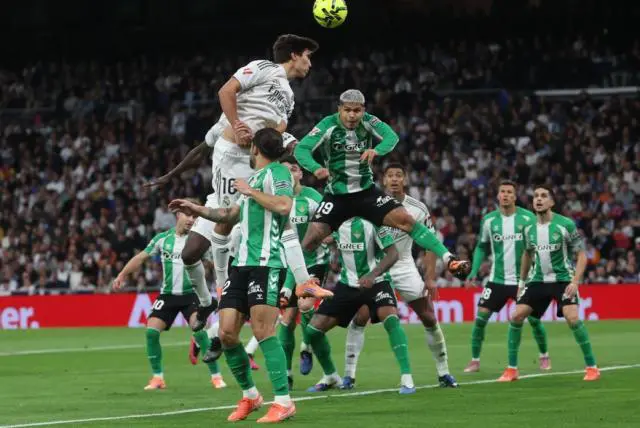
However, as the match unfolded, it also became clear that Madrid’s dominance was not built on sustained control. Betis, despite conceding heavily, enjoyed periods of possession that raised eyebrows among analysts.
Madrid often appeared willing to concede the ball, relying instead on rapid counters rather than dictating the tempo through structured buildup. While this approach can be devastating against teams that overcommit, it also introduces instability, especially against opponents capable of controlling midfield spaces more effectively than Betis.

The lack of consistent ball control became most apparent in the first half, when Betis managed to bypass Madrid’s initial press and progress the ball into dangerous areas. Real’s midfield, despite its technical quality, struggled at times to slow the game down.
Instead of recycling possession and calming the rhythm after taking the lead, Madrid frequently opted for direct passes forward. This choice kept the match open and chaotic, a scenario that favors spectacle but not necessarily control.
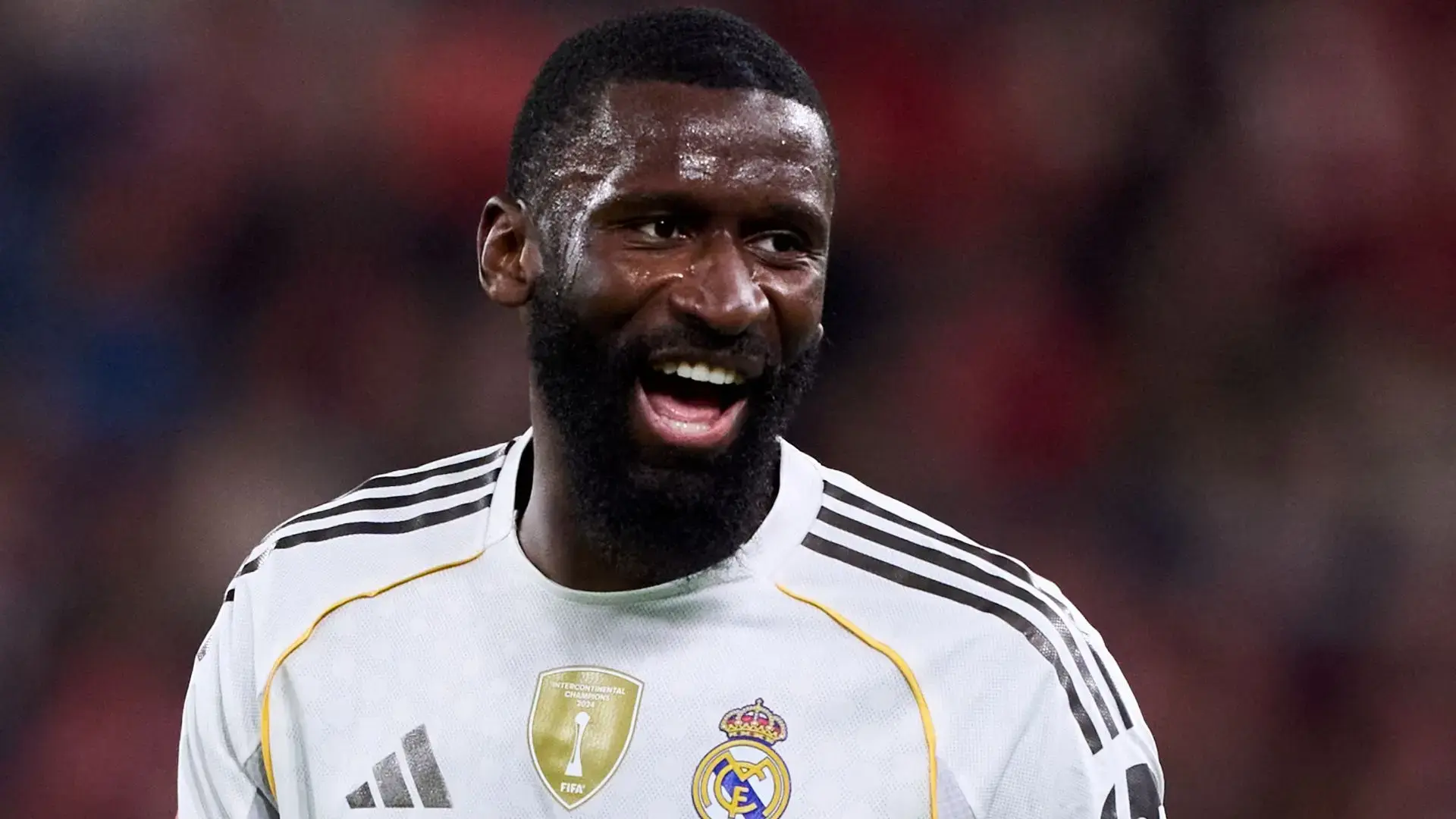
Defensively, the imbalance placed extra responsibility on the back line, particularly on Antonio Rüdiger. The German defender once again demonstrated his importance to the team, stepping out of position repeatedly to cover spaces left exposed by the midfield and fullbacks.
Rüdiger’s interventions were crucial in preventing Betis from capitalizing on transitional moments, but his workload also highlighted structural issues. A central defender should not be required to constantly firefight due to gaps in the system, especially in a match where Madrid held a comfortable lead for long stretches.
This recurring pattern has sparked controversy among Spanish media and tactical experts. While Alonso is widely praised for rejuvenating Madrid’s attacking identity, critics argue that his defensive system lacks the necessary balance to manage matches efficiently.
The high line, aggressive pressing triggers, and rapid transitions can leave the team vulnerable when possession is lost in advanced areas. Against stronger opponents, these weaknesses could be exploited far more ruthlessly.
Another point of concern is game management. With a multi-goal advantage, many expected Madrid to slow the tempo, retain possession, and force Betis to chase shadows. Instead, the match remained end-to-end well into the second half. This approach may align with Alonso’s attacking instincts, but it raises questions about adaptability.
Elite teams are often defined not only by how they attack, but by how they control games when momentum is already in their favor.
Supporters of Alonso counter these criticisms by pointing to the results. Madrid are scoring freely, entertaining fans, and maintaining pressure at the top of the table. From a results-based perspective, the system is working.
They argue that modern football increasingly rewards intensity and verticality over sterile possession, and that Alonso’s philosophy reflects the evolution of the game. Moreover, players appear fully committed to his ideas, an essential factor in implementing such an aggressive style.
Still, history suggests that trophies at the highest level are often decided by fine margins. In knockout competitions and high-stakes league clashes, the ability to control space, tempo, and possession becomes critical.
Matches against teams like Manchester City, Bayern Munich, or Barcelona will not offer the same margin for error as a home game against Betis. In those contexts, defensive structure and midfield control are not optional—they are decisive.
Antonio Rüdiger’s role in this match may ultimately serve as a warning sign. While his leadership and physical presence are invaluable, overreliance on individual defensive heroics is rarely sustainable over a long season.
If Madrid continue to play at such a frenetic pace without reinforcing their positional discipline, injuries, fatigue, or a single off-day could have serious consequences.
In the aftermath of the 5–1 win, the conversation around Real Madrid feels paradoxical. They are winning convincingly, scoring goals for fun, and showcasing thrilling football, yet doubts persist. This tension reflects the high standards associated with the club.
At Real Madrid, success is not measured solely by goals or victories, but by control, authority, and dominance in every phase of the game.
Xabi Alonso now faces a familiar challenge for modern elite coaches: how to balance entertainment with efficiency. Refining the defensive system, improving ball retention in key phases, and managing match tempo more intelligently could elevate this Madrid side from dangerous contenders to true European favorites.
The win over Betis may have delivered three points and five goals, but it also provided a clear reminder that tactical evolution is still a work in progress.