
Juan Manuel Márquez’s recent revelation has reignited global interest in one of boxing’s most iconic rivalries, offering fans a chilling psychological portrait of what it truly meant to face Manny Pacquiao at the height of his powers.
Speaking with rare emotional intensity, Márquez described the experience not as a sporting contest, but as a descent into something far darker and more primal. “It was like fighting a demon from hell,” he confessed, his words echoing across the boxing world.
Coming from a man celebrated for his composure, intelligence, and tactical brilliance, such a statement instantly elevated the narrative beyond normal pre-fight bravado into the realm of genuine trauma and awe.
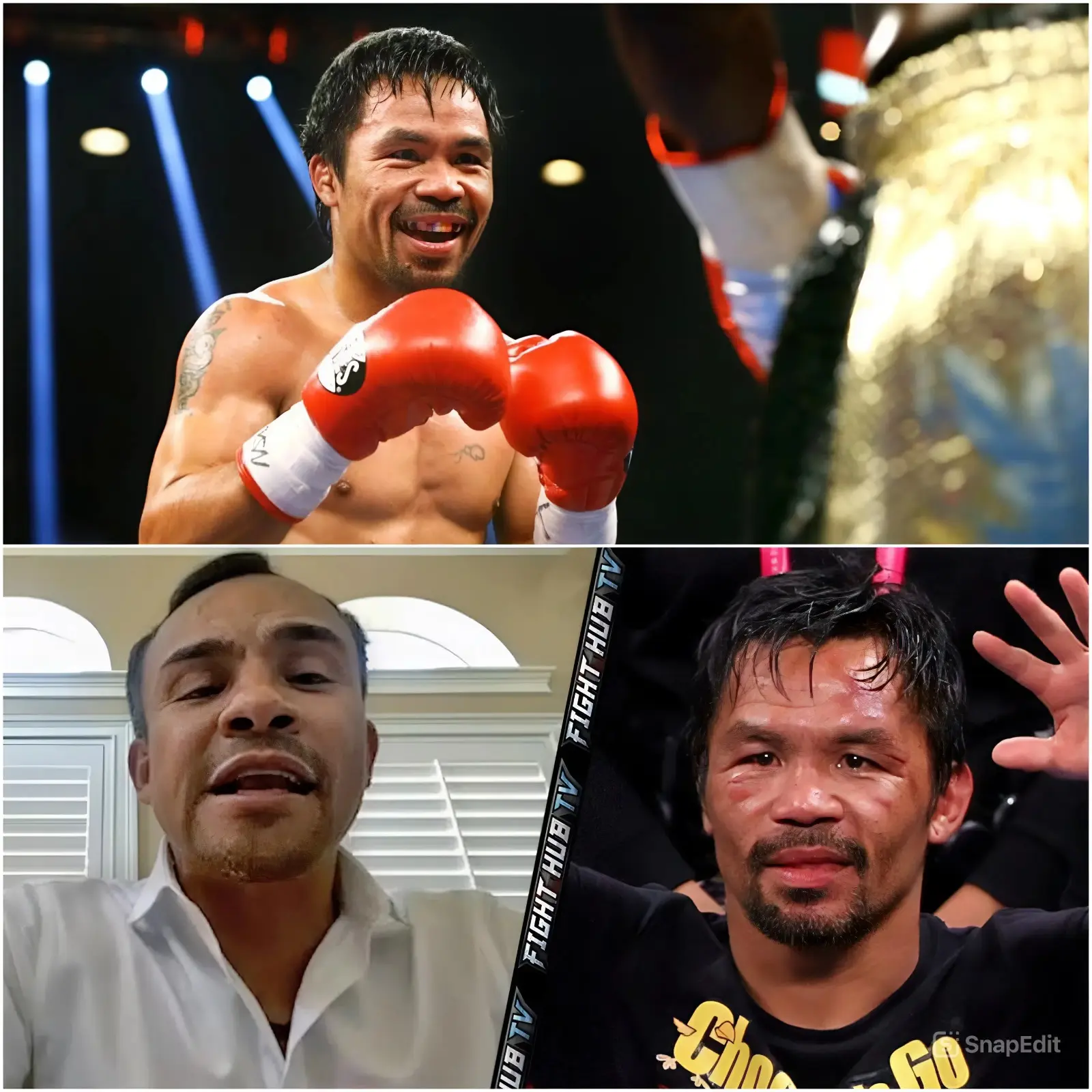
Márquez went on to paint a vivid picture of Pacquiao’s physical attributes, choosing words that sounded more like a horror story than a technical breakdown.
“He was fast as lightning, lethally explosive, constantly moving, and extremely dangerous,” Márquez recalled, admitting that even years later, the memory still made his hands tremble. According to him, Pacquiao’s speed wasn’t merely athletic; it felt unnatural, almost inhuman.
Each punch seemed to come from impossible angles, each movement defied prediction, leaving Márquez feeling as though he was reacting to something he could never fully see or understand.
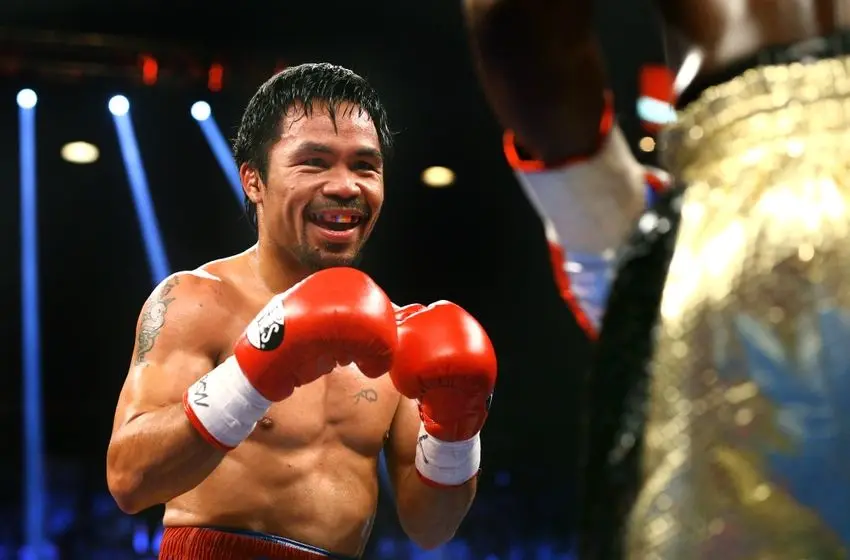
What made the experience even more unsettling, Márquez explained, was Pacquiao’s relentless pressure. Unlike many elite fighters who rely on bursts of aggression followed by moments of calculation, Pacquiao never appeared to slow down.
“There was no rest, no safe distance,” Márquez said, emphasizing that every second in the ring felt like survival mode. He described rounds that felt like hours, where instinct replaced strategy and pure willpower became the only defense against a storm that never stopped coming.
For a fighter known as one of the smartest counterpunchers in history, being pushed into such chaos was deeply unsettling.
Psychologically, Márquez admitted the fight tested him in ways no other opponent ever had. He explained that Pacquiao’s unpredictability shattered conventional preparation. “You study tape, you plan combinations, but then he’s in front of you and none of it matters,” Márquez revealed.
The Filipino icon’s ability to explode forward without warning forced Márquez to constantly question his own timing and instincts. That mental pressure, he said, was almost worse than the physical punishment, because it created doubt—something elite fighters rarely allow to enter their minds.
Adding to the eerie atmosphere was Pacquiao’s demeanor outside the exchanges. Márquez noted that between rounds and even during moments of separation, Pacquiao would often smile calmly, almost cheerfully.
“He was smiling, like none of it affected him,” Márquez said, describing how unsettling it was to see such composure amid violence. That smile, according to Márquez, felt like a silent challenge, a message that the storm would continue no matter what.
To him, it symbolized supreme confidence and an unbreakable belief that he would eventually overwhelm anyone standing across from him.
The rivalry between Márquez and Pacquiao is remembered for its razor-thin margins and dramatic shifts, but Márquez insists that statistics and scorecards fail to capture the true intensity. “People see close fights, but they don’t feel what’s happening inside the ring,” he explained.
Each encounter demanded absolute perfection, because a single mistake against Pacquiao could be fatal. Márquez emphasized that Pacquiao’s power wasn’t just about strength; it was the speed and timing that made even glancing blows dangerous, turning minor errors into potentially career-altering moments.
Despite the fear and chaos, Márquez also spoke with deep respect. He acknowledged that facing Pacquiao forced him to evolve as a fighter. “He made me better, because survival required growth,” Márquez admitted. Preparing for Pacquiao meant refining defense, improving conditioning, and sharpening mental resilience beyond previous limits.
In that sense, the terror became a catalyst for excellence. Márquez suggested that only fighters who faced Pacquiao at his peak truly understand the level of sacrifice and courage required just to remain competitive.
From Pacquiao’s perspective, the calm smile and relaxed posture were never meant to mock his opponents, according to those close to him. Instead, they reflected joy and faith—an inner peace that contrasted sharply with the violence of the sport.
While Márquez saw a demon-like force, Pacquiao projected serenity and confidence, reinforcing the idea that greatness often wears a disarming face. That contrast, experts argue, may have amplified the psychological impact on opponents, making Pacquiao even more formidable without saying a single word.
Fans and analysts around the world have reacted strongly to Márquez’s comments, many agreeing that they finally articulate what opponents struggled to explain for years. Pacquiao’s prime wasn’t just about wins and belts; it was about an aura that transcended normal athletic dominance.
Márquez’s testimony adds credibility because it comes from a man who stood toe-to-toe with him multiple times and emerged victorious in the end. Even so, Márquez made it clear that one knockout does not erase the nightmares that came before it.
In the end, Márquez’s confession stands as one of the most honest and haunting descriptions of elite competition ever shared by a boxing legend. It reveals that even the bravest warriors carry fear, and that true greatness can inspire terror as much as admiration.
While Manny Pacquiao may simply sit and smile, unbothered by the chaos he creates, his legacy is now further defined by the voices of those who survived him. As Márquez himself concluded, “I beat him once, but facing him at his peak is something I will never forget.”